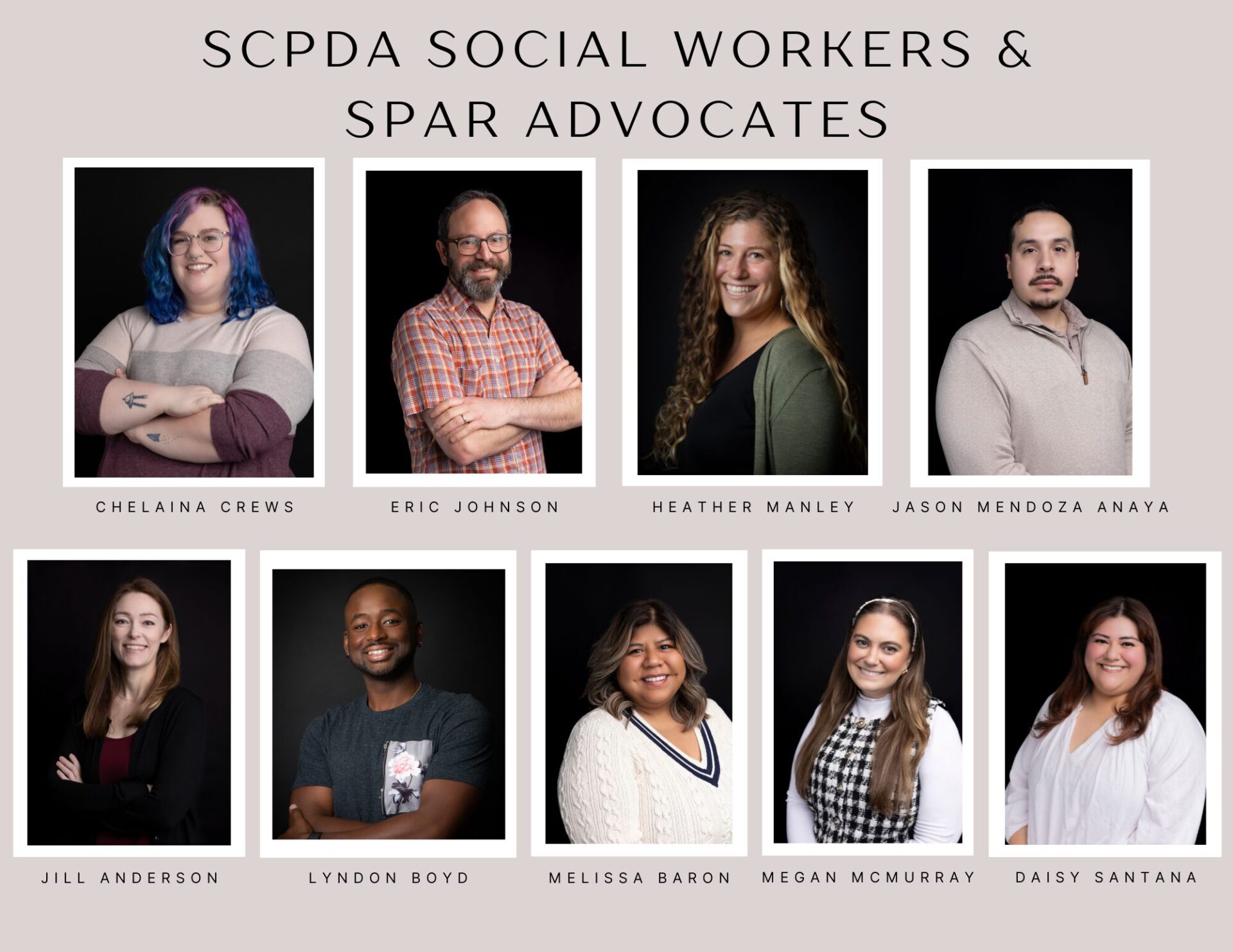
SCPDA has a long-standing infrastructure to support and integrate social service programming within public defense. Social Workers at SCPDA have been providing reentry support, mitigation, and connections to resources since 2007. For too long, people living in poverty facing criminal charges have been blamed for their circumstances and sanctioned to jail. SCPDA clients do not have meaningful access to services to successfully disentangle themselves from the criminal legal system due to lack of health insurance, transportation, language services, or the cost of the service. Social workers and client advocates’ work bridges gaps between incarceration, court involvement, and community, to support people with dignity to rebuild their lives and interrupt the cycle of incarceration.
The social services team stays apprised of best practices and is constantly forming and strengthening partnerships with values-aligned organizations in the community. SCPDA understands that there are many systemic factors that lead to criminal legal involvement and incarceration, and that successful community reintegration requires individualized and comprehensive support that addresses previously unmet needs.
SCPDA has piloted a client advocate program since 2024. Client advocates assist clients in custody develop a release plan and for clients in the community, they help secure basic needs, link them with treatment and support services, employment and education, and housing. In 2026, with grant funding from the Washington State Office of Public Defense, SCPDA began participating in the Simple Possession Advocacy and Representation Program (SPAR).
SCPDA social work and SPAR client advocate support is driven by identified client needs, and is not restricted by convictions, substance use, or other factors that may prevent someone from accessing other services in the community. Individuals receiving support from SCPDA social workers and advocates are often facing barriers related to substance use disorders, mental illness, disabilities, systemic oppression, poverty, and homelessness; staff in these roles strive to meet clients where they are and support them in progressing towards their own goals, without judgment or pressure to conform to external expectations. The approach to this work is shaped by best practices that include trauma-informed/trauma-responsive care, harm reduction, person-centered care, restorative justice, and cultural humility and responsiveness.